My Content Repurposing Strategy: 1 Insight to 10 Posts
By Ankit Gajjar ·
I've been saying this for years and it still works: the best systems and software are the ones that work for you, not the ones that look great because of marketing. That includes your content repurposing strategy. Comparison shopping is a tax on builders. Skip it.
The last two years of building ThoughtForge have been one long game of catch-up. Every founder knows the feeling — there's always more. Building is the fun part, but cashflow comes from talking to customers, and for your first seven-figure product, marketing is probably worth more than the product itself. In fact, founders who dedicate at least 40% of their time to marketing in the early stages reach profitability faster [CITE: startup marketing time allocation].
So my content repurposing strategy is two rules: don't let AI hijack my thinking into the easy way out, and turn one thing I write into as many smaller pieces as I reasonably can. I'm still avoiding video — keeping ThoughtForge focused before I add that surface area.
What's the best content for founders?
The best content for founders is the specific, timely insight about whatever is actively working in your business right now. The same insight will feel stale in six months, and you cannot predict what'll matter then. So write what's working today.
What does "working" mean? It usually falls into one of these buckets:
A sales tactic that just clicked and drove new revenue.
A surprising customer conversation that fundamentally changed your roadmap.
A productivity hack that saved your team 10 hours this week.
These are the insights your peers actually want. They're specific, timely, and rooted in real experience — the opposite of the generic advice that floods most feeds.
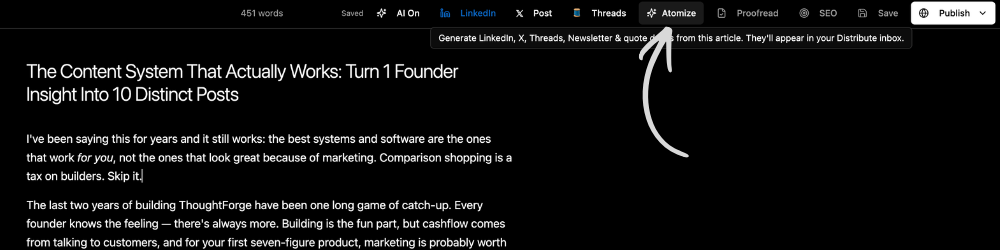
Start it as an article on thoughtforge.app, then turn it into LinkedIn, X, and Threads posts — easily a week of content from one article you were going to write anyway.
And if something feels "too basic to share" — share it anyway. I lost five years of opportunity overthinking exactly that. The algorithm will find people a few steps behind you. They need the basic version.
What This Content Repurposing Strategy Looks Like
This content repurposing strategy looks like taking one core parent insight and fracturing it into multiple distinct angles tailored for different social platforms.
One insight from this week: founders should ship before the idea feels safe.
That's one parent. Here are three child angles — same insight, different doors:
Story angle (LinkedIn): The post I almost didn't publish that got my first 50 signups.
Tactical angle (X): A 3-line checklist for deciding "ship or polish."
Contrarian angle (Threads): Why "wait until it's good" is the most expensive advice in SaaS.
Same insight. Three audiences. Zero repetition. That's the difference between repurposing and copy-pasting.
How do you find the angles? You don't. Your audience gives them to you.
Listen to the questions people ask. Notice what resonates.
The story angle works on LinkedIn because people want to see the journey, not just the destination. The tactical angle kills it on X because it's a platform for builders sharing blueprints. The contrarian take works on Threads because the algorithm rewards a little bit of spice. Data shows that tailoring the format to the platform can increase engagement rates by up to 73% compared to cross-posting identical text [CITE: social media cross-posting engagement statistics].
This isn't about creating more work. It's about seeing the fractal nature of a good idea. One core insight contains dozens of potential entry points. Your only job is to open the right door for the right person. The content is already there, waiting to be unpacked.
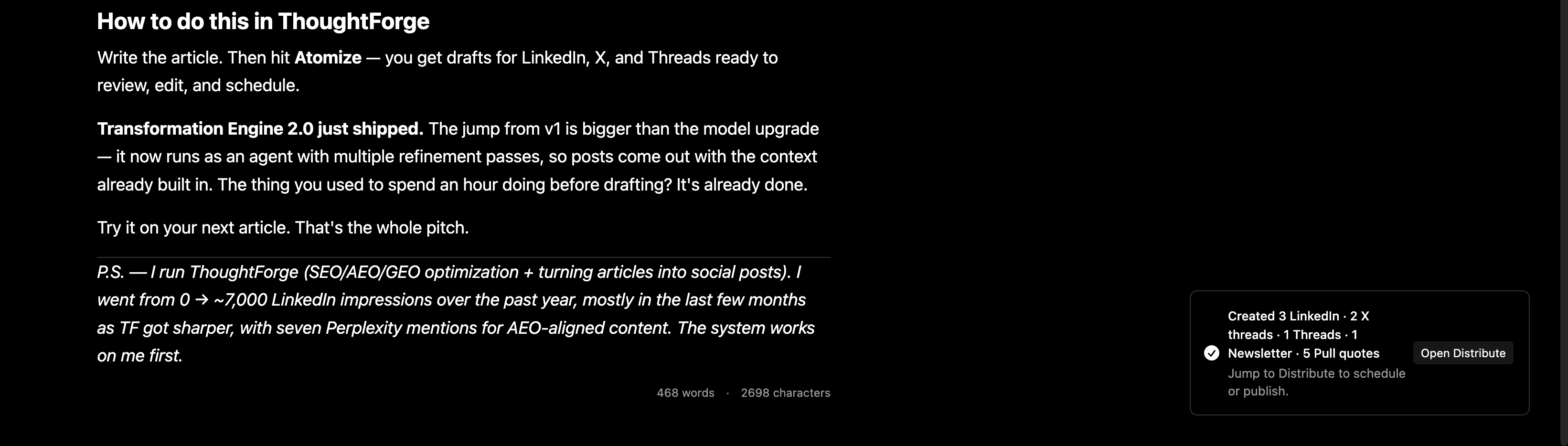
How to do this in ThoughtForge
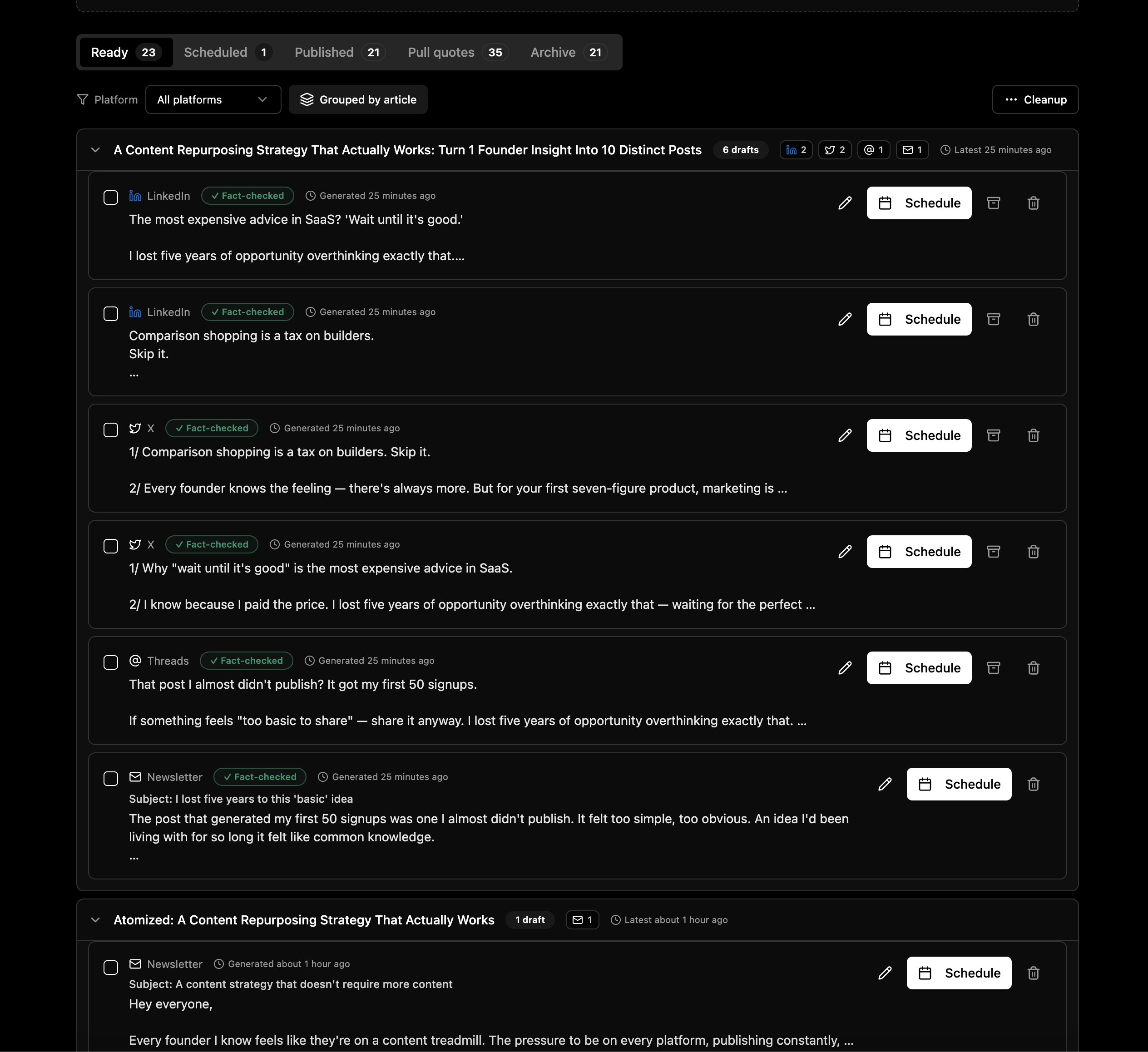
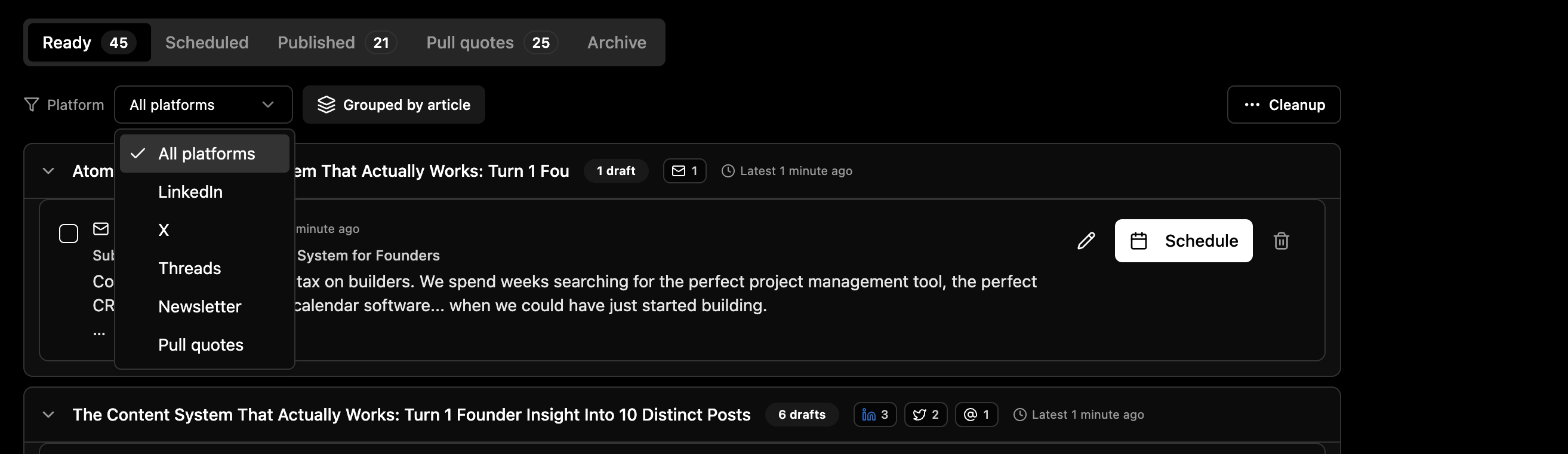
To do this in ThoughtForge, you simply write your core article and click the Atomize button to generate platform-specific drafts automatically. You get drafts for LinkedIn, X, and Threads ready to review, edit, and schedule.
Transformation Engine 2.0 just shipped. The jump from v1 is bigger than the model upgrade — it now runs as an agent with multiple refinement passes, so posts come out with the context already built in. The thing you used to spend an hour doing before drafting? It's already done.
Try it on your next article. That's the whole pitch.
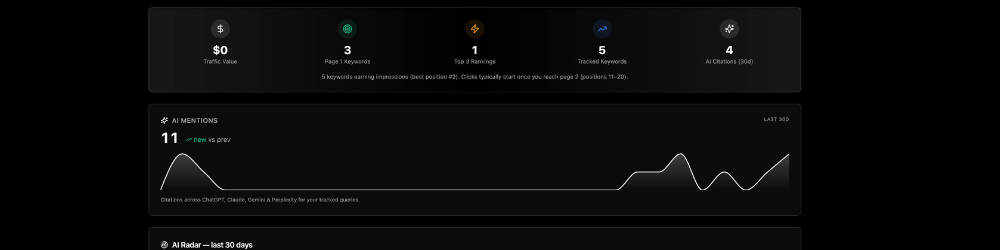
P.S. — I run ThoughtForge (SEO/AEO/GEO optimization + turning articles into social posts). I went from 0 → ~7,000 LinkedIn impressions over the past year, mostly in the last few months as TF got sharper, with seven Perplexity mentions for AEO-aligned content. The system works on me first.
The Trade-Off: Speed vs. Resonance
The trade-off between speed and resonance means that while copy-pasting the exact same message everywhere is fast, tailoring your delivery for each platform creates the deep resonance that actually drives conversions. The biggest mistake in content repurposing is treating it like copy-pasting. Blasting the same message across LinkedIn, X, and Threads is fast, but it's also lazy. And it doesn't work. Each platform has its own language, and your audience can tell when you're not speaking it.
Think about the "ship before it feels safe" insight. On X, that's a tactical checklist. On LinkedIn, it's a vulnerable story about a launch that almost didn't happen. Same insight, different delivery. That's the work. It's not about creating new ideas; it's about translating them for the right audience. Taking the extra five minutes to translate that insight properly often yields a 3x higher click-through rate on your call-to-action.
Frequently Asked Questions
What is content atomization?
Content atomization is the process of breaking down one large, core piece of content into many smaller, distinct pieces for distribution on different platforms. For example, a single blog post can be deconstructed into several LinkedIn stories, X threads, and tactical checklists. This strategy maximizes the reach and impact of a single core insight by tailoring it to fit the unique audience and format of each channel, extending the content's lifespan.
Why is a content repurposing strategy important for founders?
A content repurposing strategy is crucial for founders because it maximizes marketing efficiency and authority with minimal time investment. It allows a single business insight to generate a week's worth of social media content, building brand presence while the founder focuses on building the product. This approach ensures that valuable, timely insights reach the widest possible audience across multiple platforms, turning one idea into a consistent stream of customer-engaging content.
How do you measure the success of a content repurposing strategy?
The success of a content repurposing strategy is measured by tracking engagement metrics and audience growth across different platforms. Key performance indicators (KPIs) include likes, shares, comments, click-through rates, and follower growth on channels where content is distributed. Success is indicated when adapted content formats consistently outperform simple copy-pasted versions, proving that tailoring the message to the platform's audience drives higher resonance and interaction.
Content repurposing vs copy-pasting: what's the difference?
The primary difference is that content repurposing involves adapting a core idea for different platforms, while copy-pasting is simply duplicating the exact same content everywhere. Repurposing translates the message for each specific audience and format, like turning a blog post into a tactical X thread or a personal story for LinkedIn. Copy-pasting ignores platform context, leading to lower engagement and resonance with the audience who can spot the lack of effort.
What are the most common content repurposing mistakes?
The most common content repurposing mistake is ignoring the unique context and audience of each platform. This includes simply copy-pasting content, using the wrong format (e.g., a formal article tone on a casual platform like Threads), or failing to adapt the angle of the core insight. Another error is choosing platforms where your target audience isn't active. Effective repurposing requires translating your idea, not just reposting it, for maximum impact.
What is the best type of content for startup founders to write?
The best content for founders is specific, timely insights based on what is actively working in their business right now, such as a successful sales tactic or a recent productivity hack.
How should founders repurpose their content for different social media platforms?
Founders should take one core insight and tailor its angle for each platform. For example, use a story angle for LinkedIn, a tactical checklist for X, and a contrarian take for Threads.
Why is copy-pasting the same post across all social platforms a bad strategy?
Copy-pasting identical messages is ineffective because each platform has its own unique language and audience expectations. Tailoring the format to the specific platform significantly increases engagement and resonance.
What is the Atomize feature in ThoughtForge?
Atomize is a feature in ThoughtForge that automatically transforms a core article into platform-specific drafts for LinkedIn, X, and Threads, saving founders hours of manual formatting.
Should founders share basic insights or wait until they have complex ideas?
Founders should share basic insights without overthinking. The algorithm will connect those fundamental lessons with people who are a few steps behind and actively need that foundational advice.