My Built-In SaaS SEO Optimization Checklist (18 Checks & Real-Time Score)
By Ankit Gajjar ·
I have used several SEO tools for years and real cost is the time it takes to optimise, hence a business can justify outsourcing SEO. It's why I built my own SaaS SEO optimization checklist directly into my platform.
I started this platform just to write articles and transform articles into social media posts to schedule and publish. Then adding every other subscription that you need into straight ThoughtForge platform, so far Proofread works so well.
Adding SEO was not even on the list, but since I have been in business and marketing game for last decade, I have gotten into a habit of adding apps and websites on Google Console and Analytics. Only in last few months I saw impressions from Google Console and decided to stack so much value for people who write articles so their content shows up in AI snippet, in Chat and indexed, ranked on Google too.
Unlike social media where your connections gets notification when you publish a post, SEO/AEO/GEO needs infrastructure to support discoverability by AI and search engines before you start to optimise content for certain keywords.
This is now “a default” built into TF platform to make your content accessible to AI and search engines. Unless you are running paid ads, results of content ranking is purely based on intention and quality of content.
Anything written and published on ThoughtForge, Shopify or Wordpress will be an opportunity to optimise your content, and transforming that content into social media is extra traffic coming to your content.
Here is 18 checks, real time scoring without additional plug-ins.
The 18-Check SaaS SEO Optimization Checklist:
Keyword in title+0/10
Keyword in first 100 words+0/10
Keyword in H2 heading+0/8
Meta description set+0/5 /
Meta description has keyword+0/5
1,000+ words+0/8
1,500+ words+0/5
Has images+5/5
Image alt text with keyword+0/5
Internal links (2+)+0/8
External links (1+)+0/5
Readability: Grade 11+0/8
Short paragraphs (<4 sentences)+0/5
Has bullet/number list+5/5
Schema markup ready+0/8
Keyword density+0/5
Title length: 83/60 chars+0/5
URL slug contains keyword+0/5
Breaking Down Key Checks in the SaaS SEO Optimization Checklist
While all 18 points matter, a few carry extra weight and are worth explaining. For example, Keyword in H2 heading isn't just about stuffing keywords. It's about structure. Your H2s tell Google (and readers) what each section is about. A well-placed keyword in an H2 confirms the section's relevance to the main topic, which is a powerful ranking signal.
Another crucial one is Schema markup ready. This sounds technical, but it's simple: it's a way of formatting your data so search engines can understand it instantly. Think of it like a label that says "this is an article," or "this is the author." My tool automatically handles this, making your content eligible for rich snippets in search results, which dramatically improves click-through rates.
For a SaaS tool, this is a game-changer. You can use specific schema to tell Google you're not just an article, but a software product. You can flag your pricing, your reviews, your features—all right in the search results. It’s about removing the guesswork for search engines and AI, giving them the exact data they need to see you as a solution, not just a blog post.
Finally, let's talk about Internal links. This is one of the most overlooked parts of SEO. Linking to your other relevant articles does two things: it helps users discover more of your content, and it passes authority between your pages, telling Google which of your articles are most important. It's how you build your own web of authority, and it's something I knew had to be easy to manage.
Think of it strategically. You're not just dropping links randomly. You're creating a path for both users and search engines. If you have a major guide on a topic, you should link to it from smaller, related blog posts. This tells Google, "Hey, this big guide is the main source of truth here." It's how you create topic clusters that establish your authority on a subject.
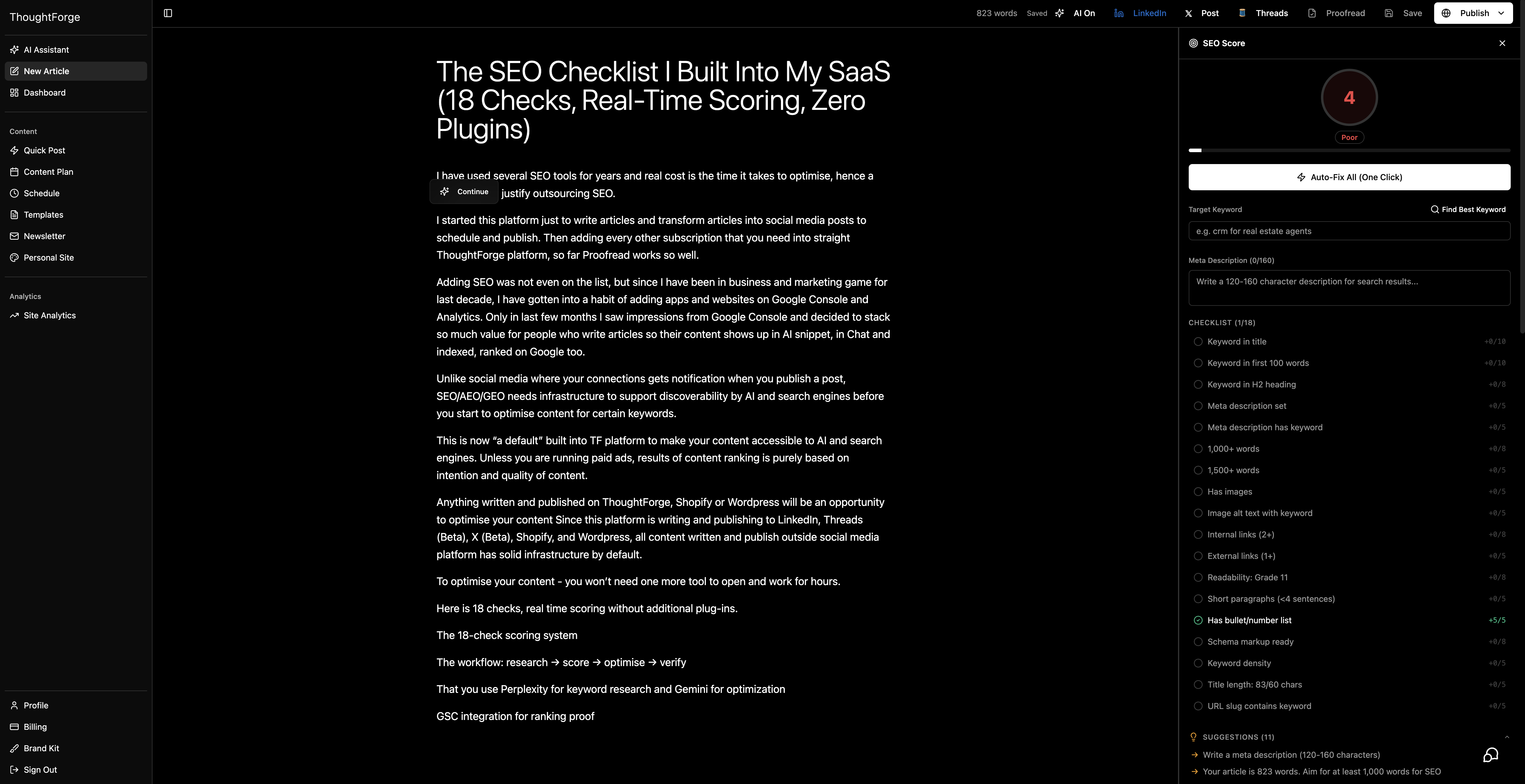
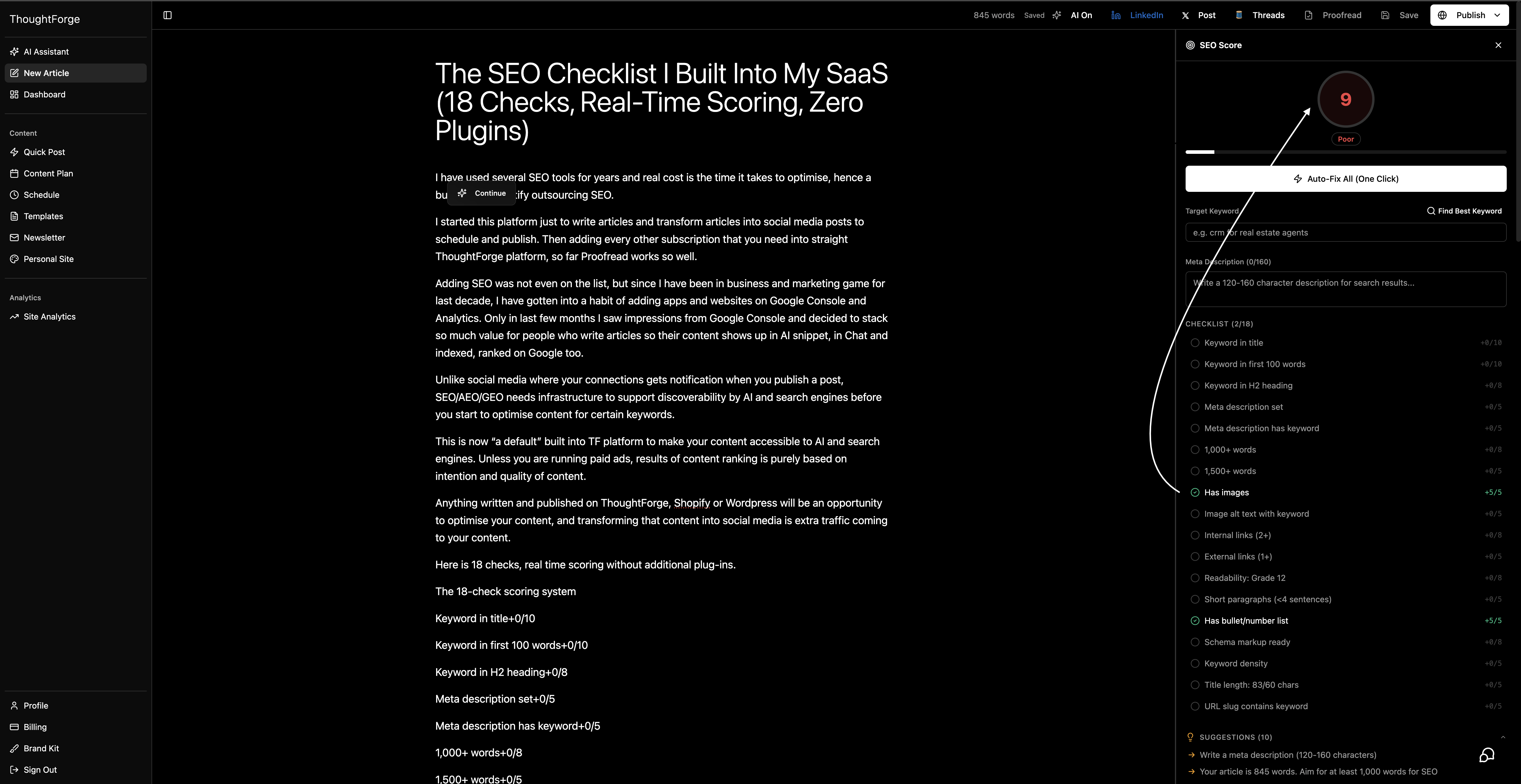
Above screenshot is before I added an image and below is after adding image.
From Score to Optimization: A Simple Workflow
The workflow for our SaaS SEO optimization checklist is simple: research → score → optimise → verify
Using best research models to find keyword and optimisation.
Don’t forget to connect your Google Search Console from profile → connectors so you know how your content has impressions and growing into clicks.
When I added a fix all improvements and although I was happy with app’s made changes because optimisation suggestions did not change entire article into AI written junkie Zombie post begging for attention.
Since then, I improved the feature to list all suggestions that make your article much better for search engines and AI. You can accept one or as many changes as you want, giving you full control over your content.
I am against finding unethical ways to get more traffic so app is your solid SEO framework, gamified to not loose manual time and will continue to improve over the time but never take on any unethical practices that is considered not allowed under Google, or any other AI models.
See how optimisation lists all the changes you probably want to accept in below screenshot.
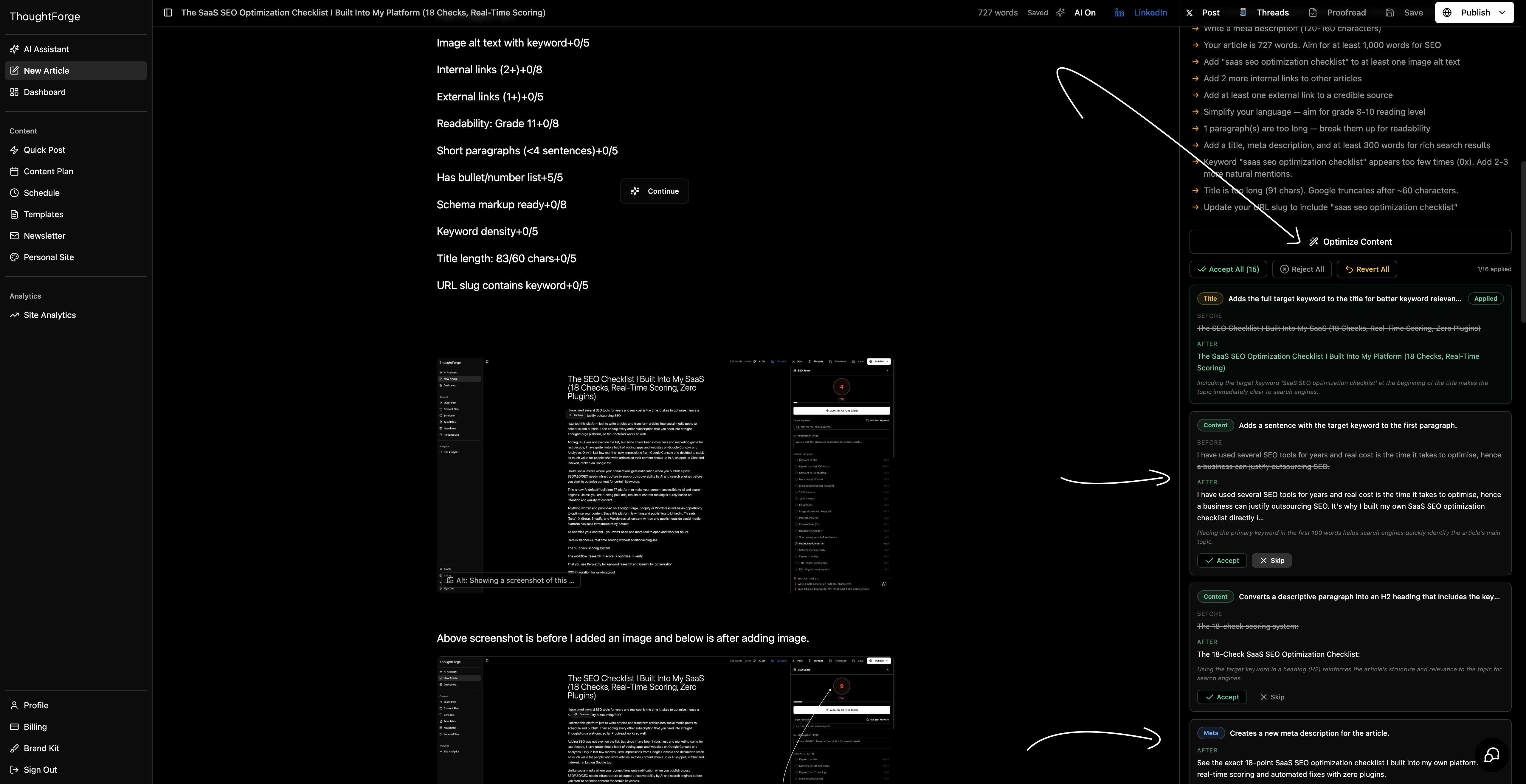
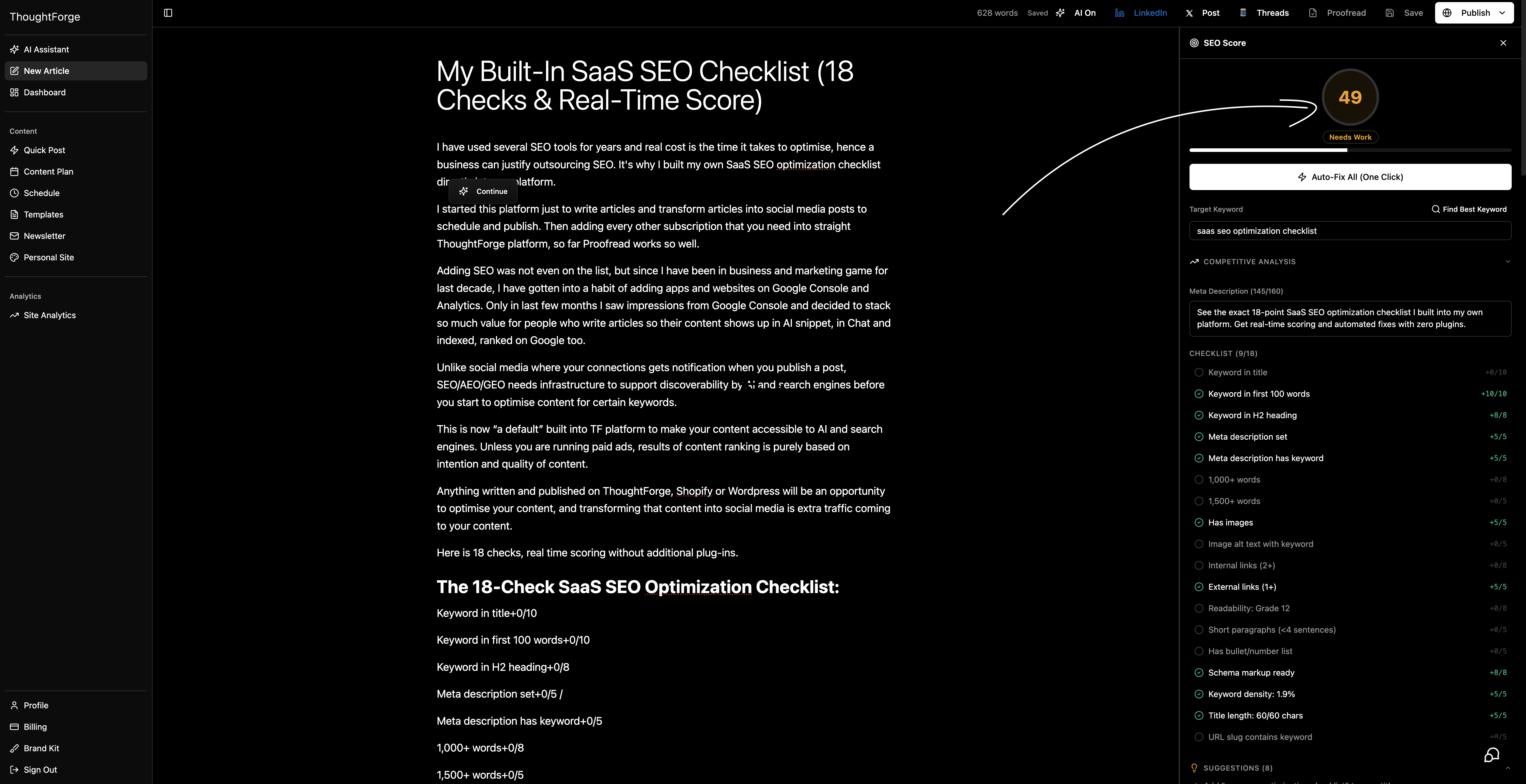
After accepting several changes score then goes to 49 leaving you to then revisit either to improve score or see your traffic growing - analytics built in ThoughtForge.app
Frequently Asked Questions
What is Answer Engine Optimization (AEO)?
Answer Engine Optimization (AEO) is the process of formatting content to be directly featured in the answer snippets of search engines and large language models. This involves using structured data (Schema), providing direct answers to common questions, and using clear headings. The goal is to become the cited source for an AI-generated response, capturing zero-click traffic and establishing topical authority on platforms like Google, Gemini, and Perplexity.
Why is a real-time SEO score important?
A real-time SEO score provides immediate, actionable feedback on how well your content meets on-page optimization criteria as you write. This allows you to fix issues like keyword placement, readability, and internal linking on the fly, rather than after publishing. This process ensures every article meets a baseline quality standard before going live, saving significant time on future edits and accelerating its potential to rank.
Which on-page SEO checks have the most impact for a new article?
For a new SaaS article, the most critical on-page SEO checks are keyword placement and structured data. You must place your target keyword in the page title, URL slug, and at least one H2 heading to signal relevance to search engines. Implementing Schema markup is equally vital, as it makes your content eligible for rich snippets in search results, which can increase click-through rates by over 30%.
Built-in SEO tools vs. third-party plugins: what's the difference?
Built-in SEO tools are integrated directly into a content platform, offering a seamless and faster workflow without compatibility issues. Third-party plugins are separate add-ons that can slow down your website, create conflicts with other plugins, and require separate updates and subscriptions. An integrated system provides a single, consistent framework for all users, ensuring reliability and efficiency.
How does Google Search Console data improve an SEO checklist?
Connecting Google Search Console (GSC) enhances an SEO checklist by grounding it with real-world performance data, such as keyword impressions and clicks. This allows you to identify which keywords are already generating visibility. You can then use the checklist to optimize pages that have high impressions but a low click-through rate, ensuring your efforts are focused on proven opportunities for traffic growth.